



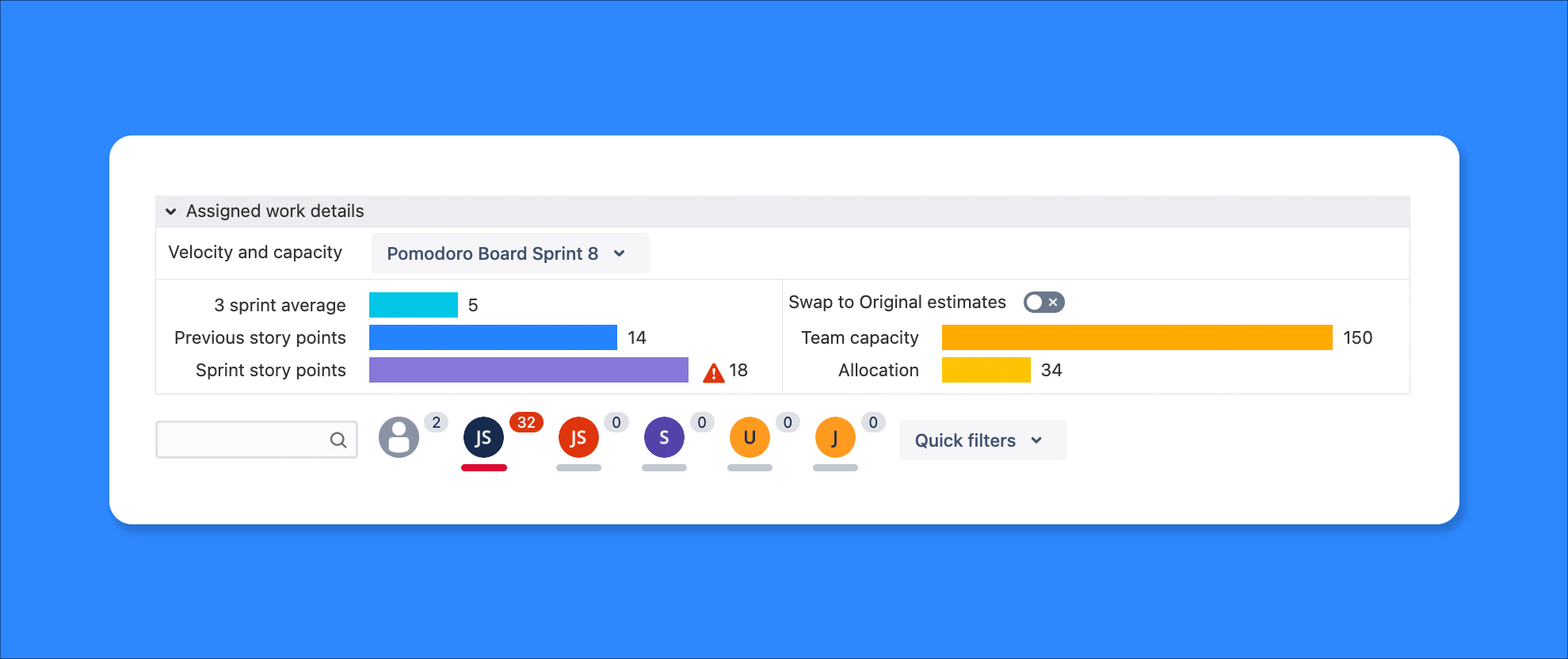
This happens for several reasons. The team may not have enough information about upcoming work to plan appropriately for the sprint. This can lead to a lack of clarity on what needs to be done and who is responsible for what, leading to confusion and frustration among team members. Two, if the team doesn’t understand its capacity well, it may plan too much work for the sprint, leading to an overloaded team that cannot complete all its tasks. Finally, if the team doesn’t consider dependencies between tasks, it may be blocked and unable to move forward with its work.
Using Sprint Planning and Capacity Planning for Jira can help teams avoid these problems by giving them visibility into upcoming work and their capacity to complete it. This tool can help teams plan their sprints more effectively, leading to better business outcomes.
Sprint planning and capacity planning for Jira helps teams to plan their sprints more effectively, leading to better business outcomes. Our customers have high degrees of completion of their sprints and keep using the application with a renewal rate of over 80%.
This tool provides visibility into upcoming work and team capacity, so teams can avoid overloaded sprints and confusion about what needs to be done. It also considers dependencies between tasks so that teams can plan their work more efficiently. As a result, our customers see better results from their sprints, with higher completion rates and fewer blocks.
If you’re looking for a way to improve your team’s Sprint performance, Sprint Planning and Capacity Planning for Jira is a great place to start. Try it today to see how it can help your team succeed.
Rob Borges spent the first half of his career hunting waste as a Lean Six Sigma Master Black Belt and wrangling portfolios as a PMI Portfolio Manager — until he realized the tidiest process on earth still can't out-plan an optimistic human. So he switched sides and became an Agile Coach. These days he helps Kanban, Scrum, and Agile-at-Scale teams trade gut-feel deadlines for flow data, turning "we'll probably ship sometime in Q3" into release dates leaders can actually take to the board. His rule of thumb: hope is not a forecast, but your throughput history usually is.
The five sprint metrics government PMOs should track to know a sprint is healthy: say-do ratio, velocity stability, commitment-to-capacity, scope churn, and carryover.