Ever find yourself wondering whether your sprint planning sessions are actually helping your team: or just eating up valuable development time? You're not alone. Enterprise agile teams everywhere are grappling with a fundamental question: should we stick with tried-and-true manual planning methods, or is it time to let AI take the wheel?
The answer isn't as black and white as you might think. Both approaches have their merits, and the best choice depends on your team's maturity, size, and specific needs. Let's dive into the nitty-gritty of AI-powered versus manual planning to help you make the right call for your enterprise.
The AI Revolution in Sprint Planning
Artificial intelligence has quietly revolutionized how forward-thinking teams approach agile planning. Organizations implementing AI-assisted agile tools report some pretty impressive numbers: up to 40% faster release cycles and a 35% reduction in planning overhead. But what does this actually look like in practice?

AI-driven sprint planning tools excel at processing massive datasets and converting them into actionable insights. Think of it as having a data scientist embedded in every planning session, analyzing historical performance patterns, team capacity trends, and risk factors in real-time.
Where AI Truly Shines
The most compelling advantage of AI-assisted planning is time savings. Teams using AI-powered tools reduce prep time by nearly a third while simultaneously improving sprint predictability. Instead of spending hours debating story point estimates or manually tracking team availability, AI handles the heavy lifting of data analysis.
AI also brings objectivity to the planning process. Rather than relying on gut feelings or the loudest voice in the room, teams get evidence-based recommendations for capacity allocation, risk assessment, and sprint goal setting. This data-driven approach helps eliminate common planning mistakes like over-commitment and resource conflicts.
Advanced capacity forecasting represents another major win. AI models consider historical performance, availability patterns, seasonal variations, and past utilization rates to predict team capacity with remarkable precision. This results in more realistic sprint goals and fewer last-minute scrambles.
The AI Limitations You Need to Know
But here's the catch: AI isn't magic. It requires quality historical data to be effective, which means newly formed teams or those with limited sprint history won't see immediate benefits. The technology also depends on consistent data input; garbage in, garbage out still applies.
There's also the human element to consider. Over-reliance on AI recommendations can potentially reduce team members' decision-making skills and intuitive understanding of project dynamics. Some teams find they lose touch with the "why" behind planning decisions when they focus too heavily on algorithmic suggestions.
The Case for Manual Planning
Before we write off traditional planning methods entirely, let's acknowledge what manual planning does well. Human judgment, intuition, and direct team communication remain irreplaceable for many aspects of agile planning.

Human Judgment Still Matters
Experienced Scrum Masters and team leads bring contextual understanding that algorithms struggle to replicate. They can quickly adapt to unprecedented situations, account for team dynamics that don't show up in data, and make judgment calls based on nuanced factors like stakeholder relationships or technical debt considerations.
Manual planning also offers complete flexibility. When stakeholders request sudden priority changes or unforeseen technical challenges emerge, human-led teams can pivot immediately without waiting for model retraining or data analysis.
The Manual Planning Reality Check
However, let's be honest about manual planning's limitations. Traditional planning ceremonies consume significant time that could be spent on actual development work. Hours spent estimating story points, debating priorities, and attempting to predict problems create substantial planning overhead.
Manual estimation is also notoriously inaccurate. Subjective assessments are prone to bias, overconfidence, and inconsistency across different team members. This leads to frequent over-commitment and sprint goal misses that could be avoided with data-driven insights.
As team size and project complexity increase, manual coordination becomes increasingly difficult and error-prone. What works for a small co-located team often breaks down when managing multiple distributed squads.
Head-to-Head Comparison
| Aspect | AI-Assisted Planning | Manual Planning |
|---|---|---|
| Planning Time | 30% reduction in prep time | Extensive ceremony hours |
| Estimation Accuracy | Data-driven, consistent predictions | Subjective, bias-prone assessments |
| Risk Management | Proactive identification and mitigation | Reactive problem-solving |
| Scalability | Improves with team size | Becomes unwieldy at scale |
| Adaptability | Requires model retraining | Instantly flexible |
| Implementation Cost | Software investment needed | Minimal upfront cost |
| Learning Curve | Initial training required | Familiar to most teams |
So Which Approach Wins?
Here's where it gets interesting: the best approach isn't necessarily either/or. The most successful enterprise teams are adopting hybrid strategies that leverage AI's analytical power while preserving human oversight for strategic decisions.
Choose AI-Assisted Planning When:
- Your teams have mature agile practices with reliable historical data
- You're managing large, distributed teams where coordination overhead is significant
- Consistent sprint performance and faster release cycles are business priorities
- You can invest in proper tooling and team training
Stick with Manual Planning When:
- You're working with newly formed teams without sufficient historical data
- Your domain is highly unpredictable with frequent novel situations
- Budget constraints limit software investment options
- Small team sizes make administrative overhead manageable
The Divim Advantage
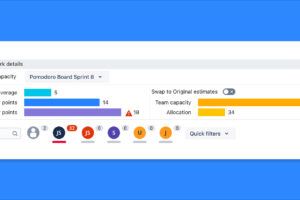
At Divim, we've seen firsthand how the right AI-assisted planning tools can transform enterprise agile teams. Our Sprint Planning for Jira solution strikes that perfect balance: automating routine administrative tasks while keeping human judgment at the center of strategic decisions.

Rather than replacing your planning process entirely, our tools eliminate busywork and provide data-driven insights that elevate your team's decision-making. Teams using our platform report not just faster planning cycles, but more confident sprint commitments and improved predictability.
The beauty of modern AI-assisted planning lies in its ability to handle the number-crunching while freeing your team members to focus on what they do best: creative problem-solving, technical excellence, and customer value delivery.
The Future is Hybrid
The question isn't really whether AI or manual planning is better: it's how to combine both approaches effectively. The most successful enterprise teams use AI to eliminate routine tasks and provide objective insights, while maintaining human oversight for strategic decisions and relationship management.
This hybrid approach represents the future of enterprise agile: lightweight, AI-enabled platforms where planning, development, and delivery coexist in a single integrated environment. Teams spend less time on administrative overhead and more time delivering value to customers.
Ready to see how AI-assisted planning could work for your enterprise agile teams? Explore our Sprint Planning solutions and discover how the right balance of automation and human insight can transform your development velocity.
The choice between AI and manual planning doesn't have to be binary. Sometimes the best answer is simply "both"( in the right proportions for your specific needs.)