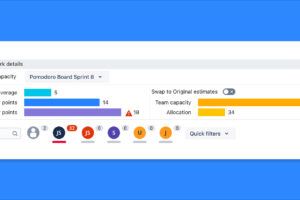
Enterprise capacity planning in Jira can transform how your organization manages resources and delivers projects, but most teams fall into predictable traps that sabotage their planning efforts. These mistakes often stem from treating capacity planning as a one-time setup rather than an ongoing strategic process.
Understanding these pitfalls: and implementing the right solutions: will help you maximize your team's productivity while preventing burnout and project delays. Let's dive into the seven most common mistakes we see enterprise teams making, along with practical fixes you can implement today.
Mistake 1: Flying Blind with Poor Data Collection
Many organizations struggle with extracting the most critical capacity indicators from their systems. Teams often fail to capture essential information like individual and team capacity levels, roles and positions, skills, and accurate time frames. This foundational error cascades into every subsequent planning decision.
Think about it: how can you plan effectively when you don't know who's actually available, what they're capable of, or how long things really take?
How to Fix It: Establish a systematic data collection process that tracks key metrics consistently. Define daily working hours and workload limits for each team member during your initial tool setup. Regularly update task progress, team capacities, and project details to ensure your planning remains accurate.
Start by gathering comprehensive data on current workloads, team availability, and resource utilization before making capacity decisions. This isn't glamorous work, but it's the foundation everything else builds on.

Mistake 2: Ignoring Your Crystal Ball (Historical Data)
Teams frequently make capacity decisions based on gut feeling rather than analyzing past performance. This approach leads to repeated mistakes and inaccurate forecasting, as organizations fail to learn from previous projects and their actual resource consumption patterns.
We get it: looking backward feels less exciting than planning forward. But your historical data is literally a crystal ball showing you what actually happens when rubber meets road.
How to Fix It: Integrate historical data into your capacity management process. Incorporate tracked time and previous estimates into future planning to improve accuracy. Analyze past projects to understand actual resource consumption versus estimates.
Use this information to refine your estimation techniques and create more realistic capacity plans that account for your team's actual velocity and productivity patterns. Your past self left you valuable clues: use them.
Mistake 3: Mixing Up Your Planning Timeframes
Organizations often apply the same planning approach regardless of timeframe, failing to differentiate between immediate tactical needs and strategic long-term capacity requirements. This leads to either over-preparation for near-term work or insufficient planning for future growth.
It's like using the same map for a neighborhood walk and a cross-country road trip: technically possible, but not particularly useful.
How to Fix It: Implement multiple capacity strategies based on your specific situation. Use a lead strategy when you anticipate rapid growth, proactively increasing capacity ahead of expected demand. Apply a lag strategy to minimize costs by scaling only when constraints become evident, though this requires accepting some risk.
Consider a match strategy that aligns capacity with customer demand through incremental adjustments, or an adjustment strategy that continuously optimizes capacity based on real-time data. The key is matching your planning horizon to your planning approach.

Mistake 4: Communication Breakdowns That Would Make a Soap Opera Proud
Project managers and teams frequently operate on different pages regarding capacity expectations and limitations. This disconnect creates situations where team members are assigned work without understanding the bigger picture, leading to unrealistic commitments and failed delivery promises.
We've all been there: someone promises the moon while you're still figuring out how to build a rocket.
How to Fix It: Establish regular planning meetings to discuss capacity allocation and adjustments. Conduct training sessions on using capacity planning tools, covering features like timelines, workload views, and reports. Have honest conversations with your team about realistic capacity and workload.
Schedule regular retrospectives to gather feedback on planning effectiveness and make collaborative decisions about resource allocation. Good capacity planning is a team sport: make sure everyone's playing by the same rules.
Mistake 5: Set-It-and-Forget-It Planning (Spoiler: It Never Works)
Many teams treat capacity planning as a set-it-and-forget-it activity, failing to adjust as conditions change. This rigid approach ignores the reality that work environments are inherently unstable, and even meticulous planning can be disrupted by unexpected events.
Planning isn't like programming a washing machine: you can't just press start and walk away.
How to Fix It: Monitor available capacity continuously rather than only at project kickoff. Regularly review team workloads and timelines to ensure alignment with project goals. Use workload indicators to identify bottlenecks or over/under-utilized resources and adjust task assignments to balance workloads effectively.
Optimize resource allocation through ongoing analysis rather than waiting for problems to escalate. Build in the ability to adapt quickly to changing circumstances by maintaining real-time visibility into capacity utilization.

Mistake 6: Playing Fast and Loose with Capacity Calculations
The ability to calculate resource needs and current capacity requires significant attention to detail, yet many teams rush through this critical step. Imprecise calculations lead to either overallocation: causing team burnout: or underutilization: wasting valuable resources.
Math might not be everyone's favorite subject, but in capacity planning, precision pays dividends.
How to Fix It: Input effort estimates carefully for all tasks in Jira, whether using hours, man-days, or story points. Account for absences such as holidays, sick leaves, and other unavailability when calculating capacity, treating any absence as zero capacity for that period.
Define clear goals for your capacity planning adoption, such as workload optimization, project timeline accuracy, and reducing burnout. Use reports to track team performance and identify areas where estimation accuracy needs improvement. Remember: garbage in, garbage out.
Mistake 7: Tool Chaos and Over-Customization Nightmares
Organizations either select capacity planning tools that don't match their specific needs or over-customize their Jira environment, creating a fragmented ecosystem where teams can't collaborate effectively. This mistake wastes time, creates confusion, and ultimately defeats the purpose of implementing capacity planning.
The goal is to make planning easier, not to create a Rube Goldberg machine of interconnected customizations.
How to Fix It: Identify your team's specific needs before selecting tools, considering factors like cross-project visibility, time tracking, and dependency management. Choose appropriate capacity planning tools that align with your requirements: solutions like Divim's Sprint Planning can streamline this process by integrating directly with your existing Jira workflows.
Configure permissions and access levels appropriately during setup, but avoid excessive customization that creates silos. Stay updated on new features and integrations offered by your chosen tools, and periodically reassess your team's needs to adjust configurations accordingly without adding unnecessary complexity.
The Path Forward
Enterprise agile capacity planning doesn't have to be painful. By avoiding these seven common mistakes, you'll create a more predictable, sustainable planning process that actually helps your teams deliver better results.
The key is remembering that capacity planning is fundamentally about people: their time, their skills, and their well-being. Get the human elements right, support them with the right tools and processes, and the numbers will follow.
Start with one or two of these fixes rather than trying to overhaul everything at once. Small, consistent improvements compound over time, just like the capacity planning challenges that got you here in the first place.
Ready to transform your enterprise agile planning? Check out our advanced sprint planning solutions designed specifically for teams dealing with complex capacity challenges.